Surveillance Automation and AI by Mirasys VMS

Mirasys is a leading VMS platform developer that is known for its Open System Architecture. Their Surveillance Automation and AI are a game changer for operators – See Video

Surveillance Automation and AI from Mirasys: Empowering Security and Operational Efficiency

Mirasys leads the way in surveillance automation and artificial intelligence, offering an array of powerful modules that help businesses, government agencies, and schools enhance their security and streamline operations. These solutions harness the latest advancements in AI to provide real-time insights and actionable intelligence, enabling organizations to respond swiftly and effectively to potential threats or operational inefficiencies. Each module offers distinct advantages tailored to meet the unique challenges of modern security landscapes.

Video Analytics serves as the backbone of Mirasys’s intelligent surveillance, transforming raw video footage into actionable insights. By analyzing patterns, movements, and behaviors, this module can identify unusual activity, optimize resource deployment, and ensure faster response times to incidents. Whether monitoring large-scale campuses or high-traffic facilities, Video Analytics reduces the need for constant manual observation, saving both time and manpower.

Object Detection elevates situational awareness by recognizing specific objects in monitored areas, such as unattended luggage, packages, or restricted items. For businesses, this minimizes inventory shrinkage and ensures safety. For government agencies and schools, it enhances security by identifying potential threats in public spaces.

Weapon Detection is a crucial AI-driven tool for environments where safety is paramount. By identifying firearms and other weapons in real-time, this module enables swift alerts to security personnel, helping mitigate risks and potentially saving lives. This proactive approach is invaluable in schools, event venues, and government buildings.

License Plate Recognition (LPR) enhances access control and traffic monitoring. LPR automatically reads and records license plates, ensuring only authorized vehicles enter restricted areas. Businesses benefit from efficient parking management, while schools and agencies strengthen perimeter security.

Facial Recognition supports advanced access control and identity verification, bolstering safety in sensitive areas. Businesses use this for employee authentication, schools for visitor monitoring, and government agencies for law enforcement purposes. Complementing this is Facial Blurring, which balances security with privacy by anonymizing faces in non-critical scenarios, ensuring compliance with data protection laws while maintaining operational transparency.

Area Privacy ensures sensitive locations are shielded from unauthorized surveillance. This feature is particularly useful for organizations needing to maintain confidentiality in areas like offices, labs, or healthcare facilities, while still monitoring the broader environment.

Storyboarding is a cutting-edge feature that consolidates relevant video clips into a chronological narrative. This capability streamlines investigations by providing a clear sequence of events, reducing the time spent sifting through hours of footage and improving incident response.

Together, these Mirasys modules empower organizations to proactively protect their operations, ensure safety, and optimize efficiency. By integrating these intelligent tools, businesses, government agencies, and schools can confidently navigate today’s complex security challenges with precision and peace of mind.

Return on Investment: Investing in Mirasys’s Surveillance Automation and AI systems delivers a compelling return on investment (ROI) for businesses, government agencies, and schools. By leveraging AI-driven capabilities like Video Analytics and License Plate Recognition, organizations can significantly reduce labor costs associated with manual monitoring and investigations. Real-time detection modules, such as Weapon Detection and Object Detection, minimize losses by preventing incidents before they escalate, saving money on potential damages, lawsuits, or disruptions. Features like Storyboarding streamline incident reviews, cutting down investigation times and improving productivity. Additionally, privacy-focused tools like Facial Blurring and Area Privacy ensure compliance with evolving data protection laws, reducing the risk of costly legal penalties. Beyond direct financial savings, these systems enhance operational efficiency, employee safety, and public trust—key factors that contribute to long-term growth and resilience. Mirasys’s intelligent surveillance tools are not just a security investment; they are a strategic asset that drives measurable value across all sectors.

To inquire about the modules above, please email us by clicking here.
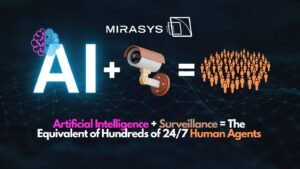
Surveillance Automation and AI

Surveillance Automation and AI

Need hardware infrastructure? We have you covered – Visit our sister company at VidioSystems

Facial Recognition is Exploding in Popularity – This New Technology is Breaking Through

Facial Recognition — The Future of Security Around the World

In an age where security and convenience are paramount, facial recognition technology has emerged as a groundbreaking solution, reshaping how we approach safety and authentication across various sectors. From enhancing security in public spaces to streamlining user experiences in personal devices, facial recognition is at the forefront of technological innovation.

Understanding Facial Recognition Technology
Facial recognition is a biometric technology that identifies or verifies a person’s identity using their facial features. It operates by capturing an image of a person’s face and comparing it to a database of known faces. This process involves complex algorithms that analyze unique facial landmarks, such as the distance between the eyes, the shape of the jawline, and the contours of the face.

Applications of Facial Recognition
Security and Surveillance: One of the most prominent applications of facial recognition is in security and surveillance systems. Law enforcement agencies use this technology to identify suspects and enhance public safety. For example, many cities have implemented facial recognition cameras in high-traffic areas to monitor and prevent criminal activities.

Access Control: Businesses and organizations are increasingly adopting facial recognition for access control. Employees can simply walk up to a secure entry point, and the system automatically recognizes them, allowing for seamless and secure access without the need for physical ID cards.

Smart Devices: Many smartphones and tablets now feature facial recognition as a means of unlocking devices and authorizing transactions. This technology enhances user experience by providing quick and secure access while ensuring personal data remains protected.

Retail and Marketing: Retailers are utilizing facial recognition to analyze customer behavior and preferences. By identifying returning customers, businesses can tailor marketing strategies and improve customer service, ultimately leading to increased sales and customer loyalty.

Benefits of Facial Recognition
Enhanced Security: Facial recognition systems provide a high level of accuracy and efficiency in identifying individuals, reducing the likelihood of unauthorized access or fraud.

Convenience: Users enjoy a faster and more convenient experience, whether unlocking their devices or accessing secure locations, without needing to remember passwords or carry access cards.

Data Insights: For businesses, facial recognition can deliver valuable insights into customer demographics and behaviors, helping to refine marketing strategies and improve overall service.

Addressing Privacy Concerns
While the advantages of facial recognition are substantial, it’s essential to address privacy concerns. The collection and storage of biometric data raise questions about consent and data protection. Responsible implementation and transparent policies are crucial to ensuring users’ privacy and building trust in this technology.

The Future of Facial Recognition
As facial recognition technology continues to evolve, we can expect even more advanced applications and integrations. Innovations in artificial intelligence and machine learning will enhance the accuracy and reliability of these systems. Additionally, as regulatory frameworks develop, businesses will need to navigate compliance to protect consumer rights while leveraging the benefits of facial recognition.

Conclusion
Facial recognition technology represents a significant advancement in security and convenience across various sectors. Its ability to provide fast, accurate identification makes it an invaluable tool in today’s world. As this technology continues to grow, balancing its benefits with ethical considerations will be crucial in fostering trust and ensuring a secure future.

More Information Here

facial recognition system[1] is a technology potentially capable of matching a human face from a digital image or a video frame against a database of faces. Such a system is typically employed to authenticate users through ID verification services, and works by pinpointing and measuring facial features from a given image.[2]

Development began on similar systems in the 1960s, beginning as a form of computer application. Since their inception, facial recognition systems have seen wider uses in recent times on smartphones and in other forms of technology, such as robotics. Because computerized facial recognition involves the measurement of a human’s physiological characteristics, facial recognition systems are categorized as biometrics. Although the accuracy of facial recognition systems as a biometric technology is lower than iris recognitionfingerprint image acquisition, palm recognition or voice recognition, it is widely adopted due to its contactless process.[3] Facial recognition systems have been deployed in advanced human–computer interactionvideo surveillancelaw enforcement, passenger screening, decisions on employment and housing and automatic indexing of images.[4][5]

Today’s Surveillance Upgrade: Integrating AI for Enhanced Security

In an increasingly interconnected world, the demand for advanced surveillance systems has never been higher. As security threats evolve, so too must the technologies that defend against them. At the forefront of this evolution are artificial intelligence (AI) and machine learning (ML), which are transforming surveillance systems and setting new standards for security. This blog explores how AI and ML are revolutionizing surveillance, enhancing threat detection, reducing false alarms, and enabling predictive analytics for proactive security measures.

Enhancing Threat Detection

Traditional surveillance systems rely heavily on human operators to monitor live feeds and respond to incidents. This approach, while effective, is limited by human capabilities such as attention span and the potential for error. AI and ML, however, bring a level of precision and efficiency that significantly enhances threat detection.

For example, Mirasys’ embedded AI can analyze video feeds in real-time, identifying suspicious activities, objects, or behaviors that might be missed by human eyes. The system can detect faces that are enrolled in the database, flagging known suspects or banned patrons. This capability ensures that potential threats are identified and addressed promptly, enhancing overall security.

Reducing False Alarms

One of the significant challenges in surveillance is the high rate of false alarms, which can lead to unnecessary disruptions and resource wastage. Traditional motion detection systems, for instance, might trigger alerts for benign activities such as animals passing by or changes in lighting conditions.

AI and ML algorithms significantly reduce false alarms by learning to differentiate between genuine threats and harmless events. Mirasys’ AI system, for example, can detect specific actions such as someone brandishing a firearm, immediately alerting security and popping the relevant camera feed onto the video wall. This targeted response minimizes false alarms and ensures that security personnel can focus on real threats.

Enabling Predictive Analytics

Perhaps one of the most groundbreaking contributions of AI and ML to surveillance is the ability to perform predictive analytics. By analyzing historical data and identifying trends, AI-driven surveillance systems can predict potential security incidents before they occur.

For instance, predictive analytics can help identify high-risk areas within a facility based on past incidents, allowing security teams to take preemptive measures. Mirasys’ license plate recognition (LPR) system exemplifies this by scanning every car that enters and exits a parking lot, providing valuable data that can be used for predictive analysis and enhancing overall security management.

Real-World Applications

The integration of AI and ML in surveillance is already making a significant impact across various sectors. In retail, AI-driven systems are used to monitor customer behavior, prevent theft, and optimize store layouts. In transportation, AI enhances the safety of passengers by monitoring for suspicious activities in real-time. In law enforcement, predictive analytics assist in crime prevention by identifying potential hotspots and deploying resources effectively.

For example, if someone falls to the ground, Mirasys’ AI can detect the fall and immediately alert emergency teams, ensuring a swift response. These real-world applications demonstrate the transformative potential of AI and ML in enhancing security and safety.

The Future is Actually Here Right Now

The future of surveillance lies in the seamless integration of AI and machine learning, which are revolutionizing the way we approach security. By enhancing threat detection, reducing false alarms, and enabling predictive analytics, these technologies are setting new standards for surveillance systems. With solutions like Mirasys’ embedded AI, we see practical and effective applications that transform how we secure environments. As we continue to innovate and refine these tools, the potential for creating safer, more secure environments is boundless. Embracing AI and ML in surveillance is not just an option; it is the path forward for a proactive and efficient security strategy.

Many Mirasys clients are enjoying the benefits of Artificial Intelligence to augment what their teams can do, and also detect more of the issues that their human counterparts might be missing. AI works 24/7, it doesn’t take a break or call in sick and it doesn’t go to sleep on the job, so you can see why so many security operators are adopting the technology. We would be happy to show you a live demonstration of the platform. Click here to learn more

Guardians of the Future: How AI is Revolutionizing Security in an Era of Uncertainty

As the world navigates through an era marked by heightened unpredictability and new forms of threats, the role of artificial intelligence (AI) in bolstering our security frameworks has never been more critical. From the streets we patrol to the cyberspace we safeguard, the integration of AI technologies is transforming the very fabric of physical and cyber security.

In our duty to protect and serve, the challenges we face today are vastly different from those of the past. Urban sprawl, digital expansion, and the increasing sophistication of criminal activities demand more advanced tools and tactics. AI has emerged as a formidable ally in this battle, enhancing our capabilities in detecting, analyzing, and neutralizing threats.

At the forefront of this technological revolution is Mirasys, a pioneer in Video Management Software (VMS) integrated with cutting-edge AI functionalities. Their system represents a significant leap forward in how security professionals, including police, FBI, and military personnel, approach both prevention and response strategies.

Mirasys’s VMS is not just a tool; it’s a next-generation sentinel equipped with AI-powered capabilities designed to address the multifaceted nature of modern threats:

1. **Forensic Video Search** – Time is often the most scarce resource in our line of work. Mirasys’s AI-driven forensic video search allows security operators to swiftly sift through hours of video data, pinpointing relevant events or anomalies with precision. This tool is indispensable for post-incident investigations and pattern recognition.

2. **Facial Recognition** – With the ability to quickly identify individuals against databases of known offenders or missing persons, AI-enhanced facial recognition aids in proactive monitoring and swift response, closing the gaps that manual processes once left wide open.

3. **License Plate Recognition** – Essential for monitoring vehicular movements and managing access control, this technology supports everything from traffic enforcement to alerting officers about stolen vehicles or those associated with fugitives.

4. **Object Detection** – Whether it’s unattended bags at an airport or suspicious packages in a public square, object detection algorithms are crucial in preempting potential threats, ensuring that proactive measures are taken before a situation escalates.

5. **Weapons Detection** – In today’s world, the early detection of visible weapons can be the difference between life and death. This technology empowers security personnel to act before a threat manifests, providing a critical advantage in the protection of public spaces.

6. **Anomaly Detection** – From detecting unusual behavior patterns that may indicate a workplace accident to alerting operators about disturbances, anomaly detection uses behavioral algorithms to flag activities that deviate from the norm, ensuring that each potential hazard is scrutinized and addressed.

In a world where the nature and scope of threats are constantly evolving, staying ahead means embracing the technological advancements that AI offers. Mirasys’s AI-embedded VMS is more than just a technological solution; it’s a strategic asset in the global fight against crime and terrorism. It embodies a proactive approach to security, where threats are not only anticipated but are also neutralized with precision and efficiency.

As we look to the future, the integration of AI in our security strategies is not merely an option but a necessity. The chaotic state of the world, marked by both physical and digital dangers, calls for an equally sophisticated line of defense. AI provides that sophistication, transforming every camera into a sentinel and every data point into a clue.

In embracing these technologies, we are not just upgrading our tools; we are revolutionizing the very essence of security to protect our communities, our infrastructure, and our nations. In this digital age, let us step forward with the confidence that AI empowers us to be the guardians of tomorrow, today.

Story Written by Chris Swanger

.